When you buy an original watercolor, you buy something alive. Paper that drank the water, held the color, kept the trace of the brush. And yet, once home, many people don't quite know what to do with it.
How should you frame it? What size? With what?
This article is here to demystify all of that, explain what I offer and why, and give you the keys to showcasing your watercolor without the headache.
My watercolors, originals and prints alike, are sold without a frame. That's a deliberate choice. A frame is personal: it depends on your interior, your walls, your taste, your budget. Some will prefer a budget-friendly frame from Ikea or a big-box store. Others will hand the work over to a professional framer for a bespoke result. By delivering the watercolor ready to frame, with everything it needs except the frame itself, I leave that choice entirely up to you.
Original watercolors
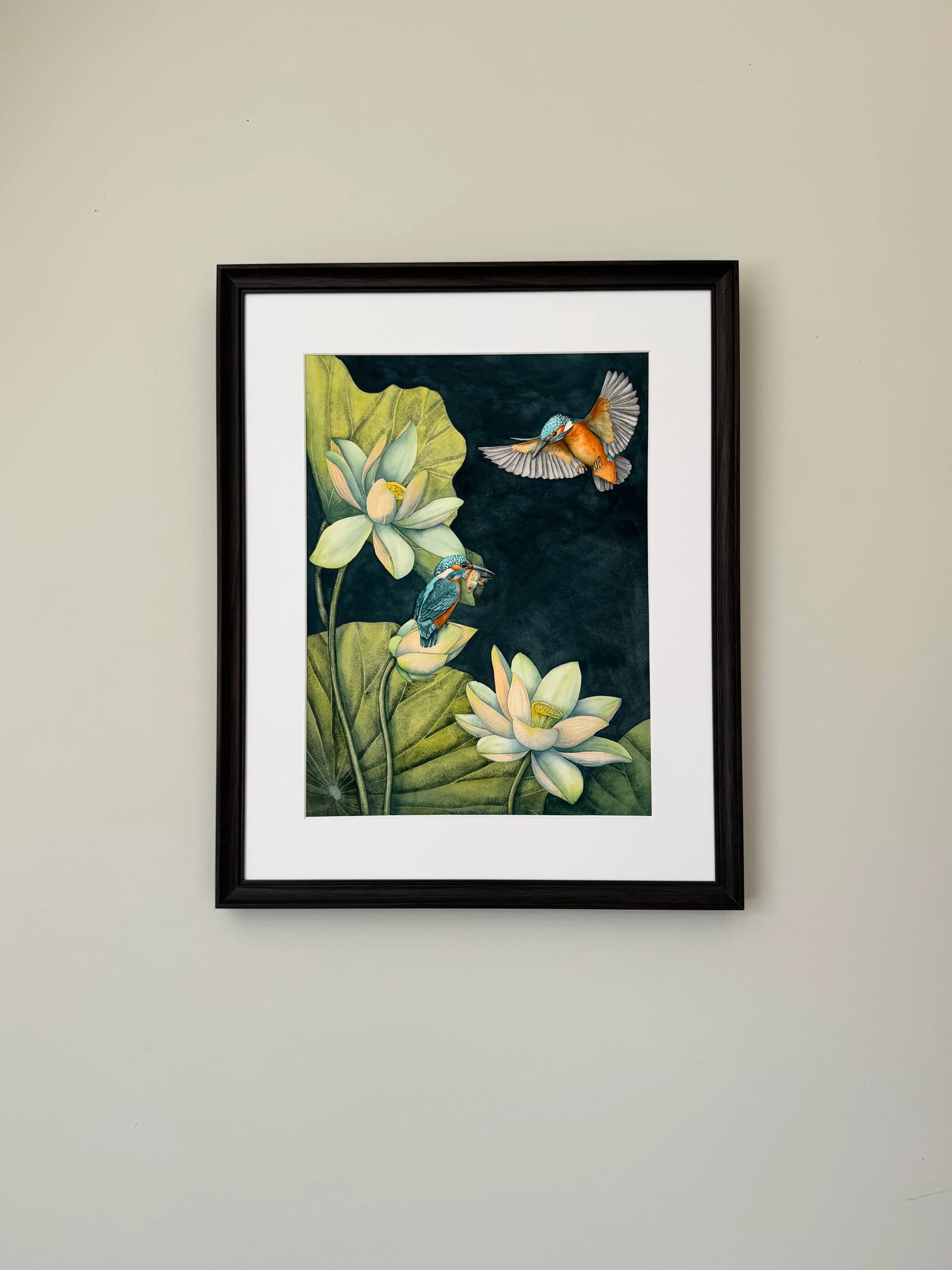
All my original watercolors are sold stretched on a backing board, with a fitted mat.
What exactly is a mat?
A mat (or passepartout) is the intermediate board that sits between the artwork and the glass of the frame. It has a window cut into its center, usually with a 45-degree bevel, which reveals the work while creating a margin, a visual breathing space around the subject.
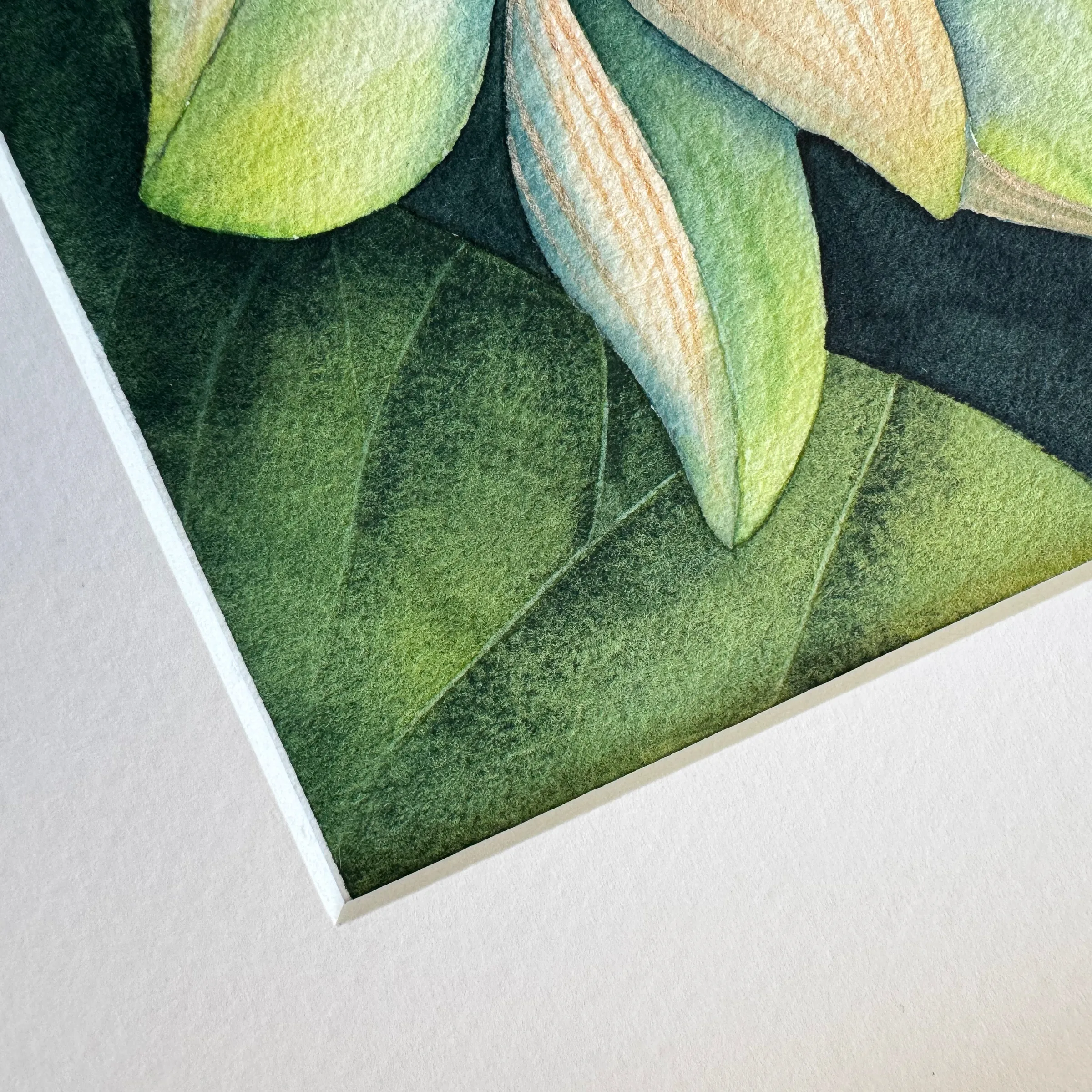
Its role is twofold: aesthetic and technical. Aesthetically, it isolates the work, gives it space, puts it on stage. Technically, it prevents the paper from coming into direct contact with the glass.
The difference is visible, and felt
You only need to compare the same watercolor framed without a mat, then with one. Without it, the work is pressed against the frame and has no room to breathe. With it, the piece immediately takes on a different dimension: the mat gives it a real place and brings it to the fore.
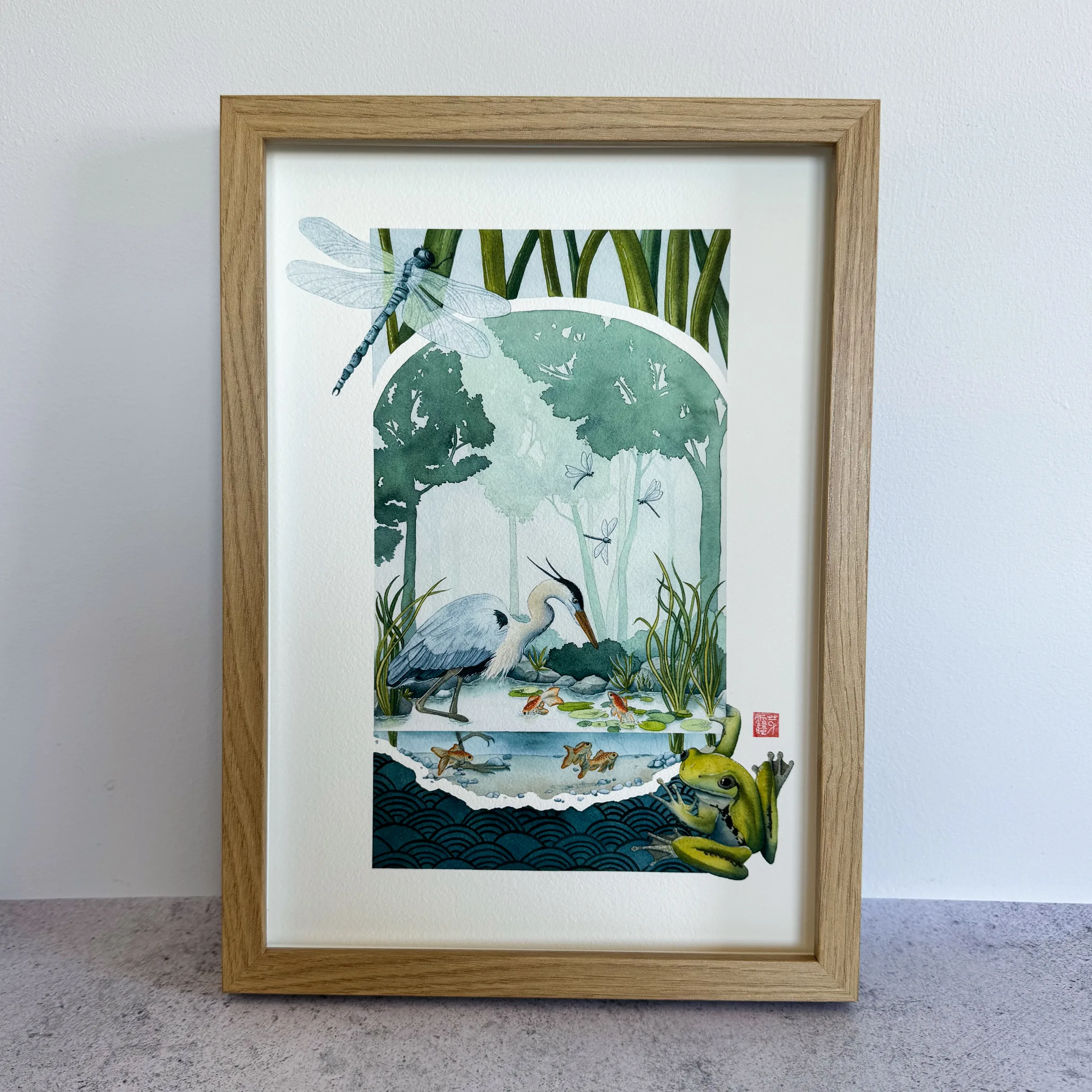
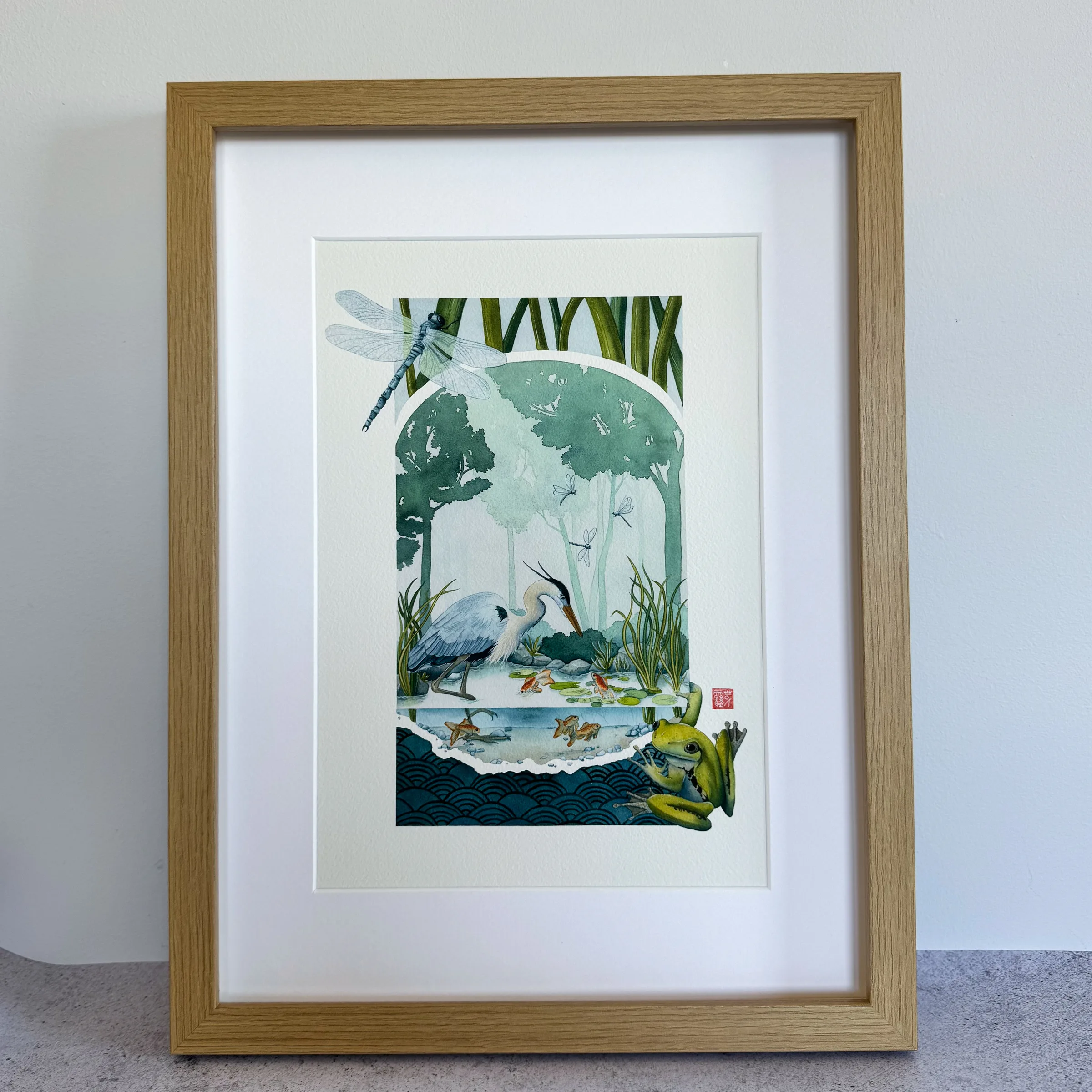
It's not a matter of convention. It's genuinely about how the image reads. The mat directs the eye, isolates the subject, and signals that what you're looking at is worth pausing over.
What's behind the mat
Watercolor is a wet medium. And despite careful paper selection and high quality materials, the sheet often buckles. To prevent this, once the painting is finished I dampen the back of the watercolor and use tape to fix it to a rigid backing board. Once dry, the watercolor stays flat.
I take care of all this preparation myself: stretching the paper onto the backing board, then cutting the mat to the right dimensions with a hand-cut 45-degree bevel.
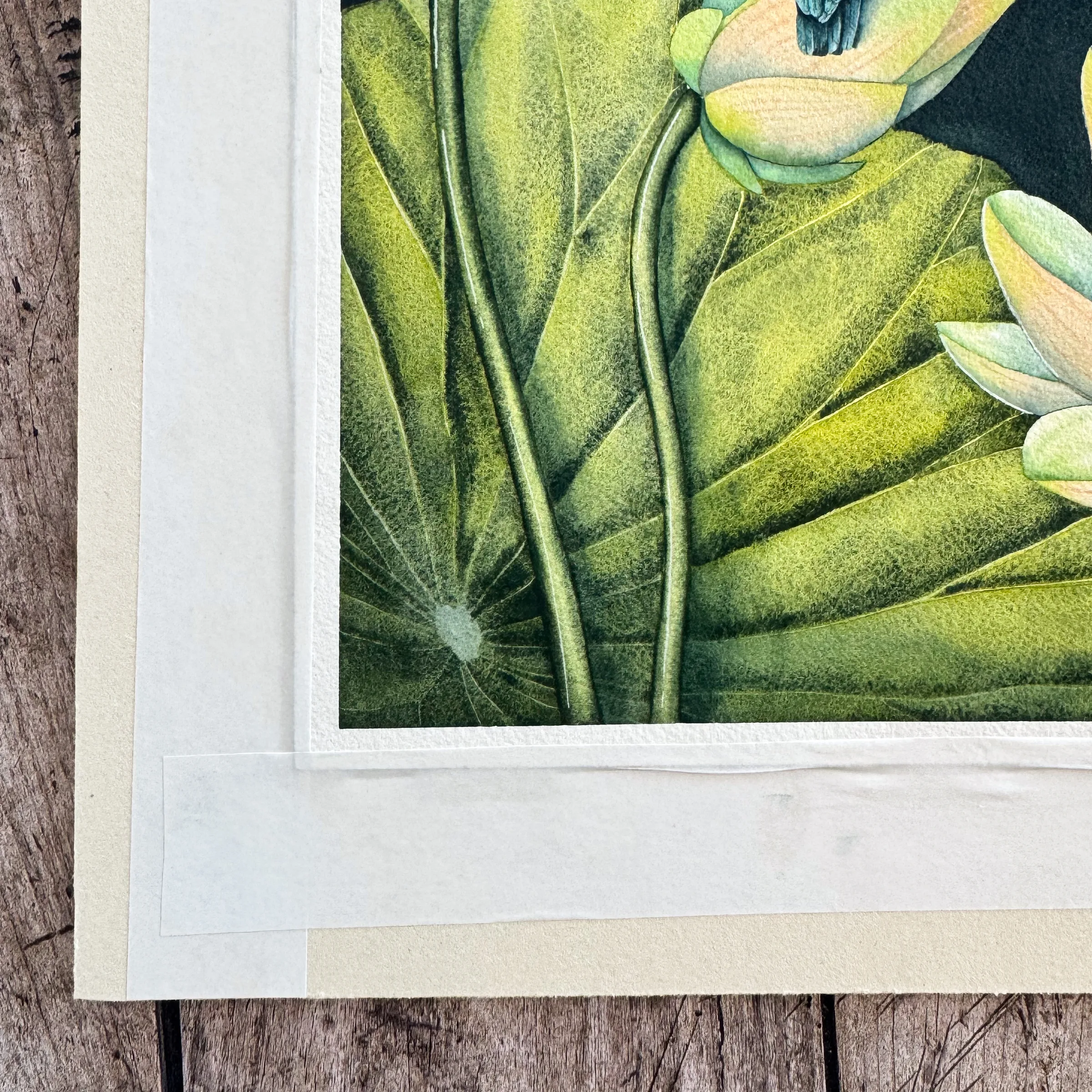
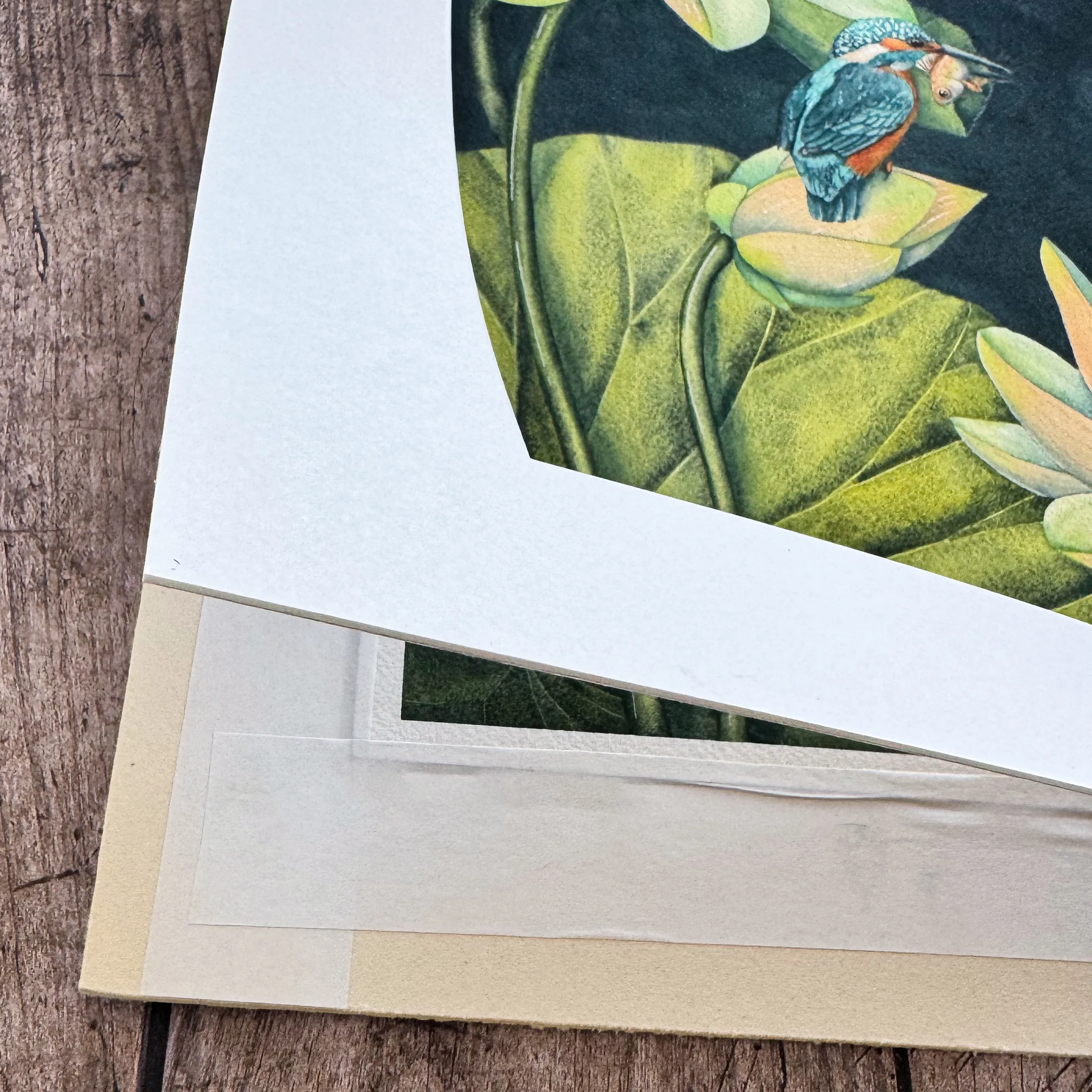
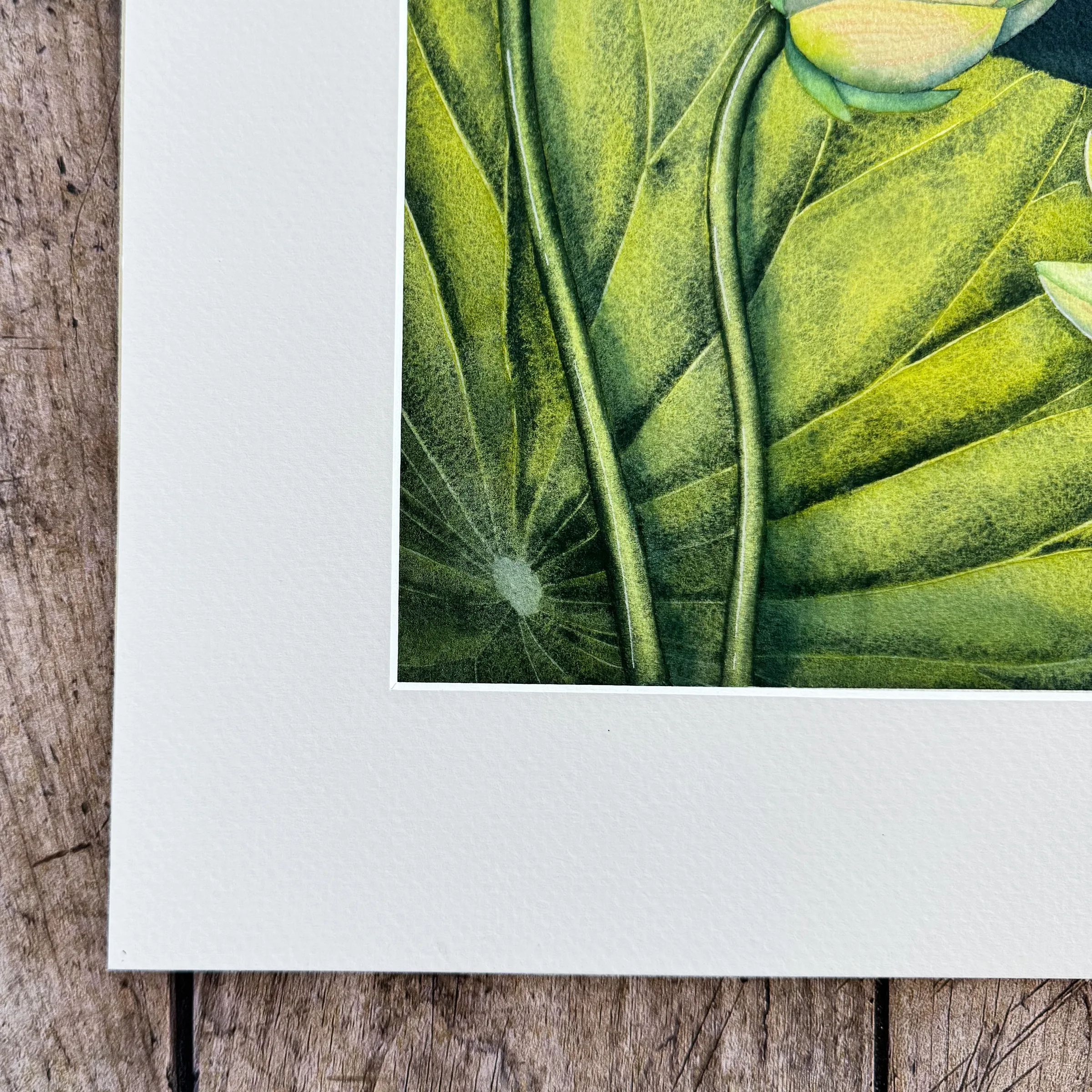
When you buy an original from me, you receive the watercolor stretched on its backing board: that is what keeps it perfectly flat once framed. Its custom mat sits on top. The mat hides the tape edges, frames the margins of the paper, and delivers a work that is literally ready to slip into your chosen frame. All you need to do is choose that frame, according to your taste and budget: a standard off-the-shelf model works beautifully, or you can hand the whole thing to a professional framer if you want something truly bespoke.
Standard sizes: how it works
This is often the question that stumps people. The good news is that there's nothing for you to calculate.
Every mat I cut is designed to fit a standard frame size, the kind you find everywhere in shops. The outer edge of the mat matches the interior dimensions of the frame exactly: it slides in without force, without gaps, without improvisation. The inner window is cut to the exact dimensions of the watercolor, no more, no less. These are two distinct measurements, both calculated in advance.
The frame size to buy is listed directly on the product page. You don't need to measure anything.
Useful reference sizes
| Frame size | Best suited for |
|---|---|
| 18 × 24 cm | Small formats, studies, cards |
| 24 × 30 cm | Medium formats |
| 30 × 40 cm | Very common, easy to find anywhere |
| 40 × 50 cm | Large format |
| 50 × 60 cm | Extra-large format |
These sizes are available in big-box stores, Ikea, DIY chains, or home décor shops. A professional framer can also make a frame to the exact dimensions if you want something more premium or personalized.
The mat size chosen for each original watercolor is the one judged most suitable in terms of scale and proportions.
A mat is more than just a piece of white cardboard
And this is where things get interesting.
The classic mat is white or ivory, and that's often the right call: neutral, timeless, it leaves all the space to the artwork. But it can also become an element in its own right.
The inlay strip
An inlay strip (filet) is a fine border just a few millimetres wide that runs along the inner edge of the mat window. I make mine from Japanese paper, in a shade chosen to harmonize with the colors of the watercolor. The result is subtle, precious, and adds a touch of care that you notice without quite knowing why.
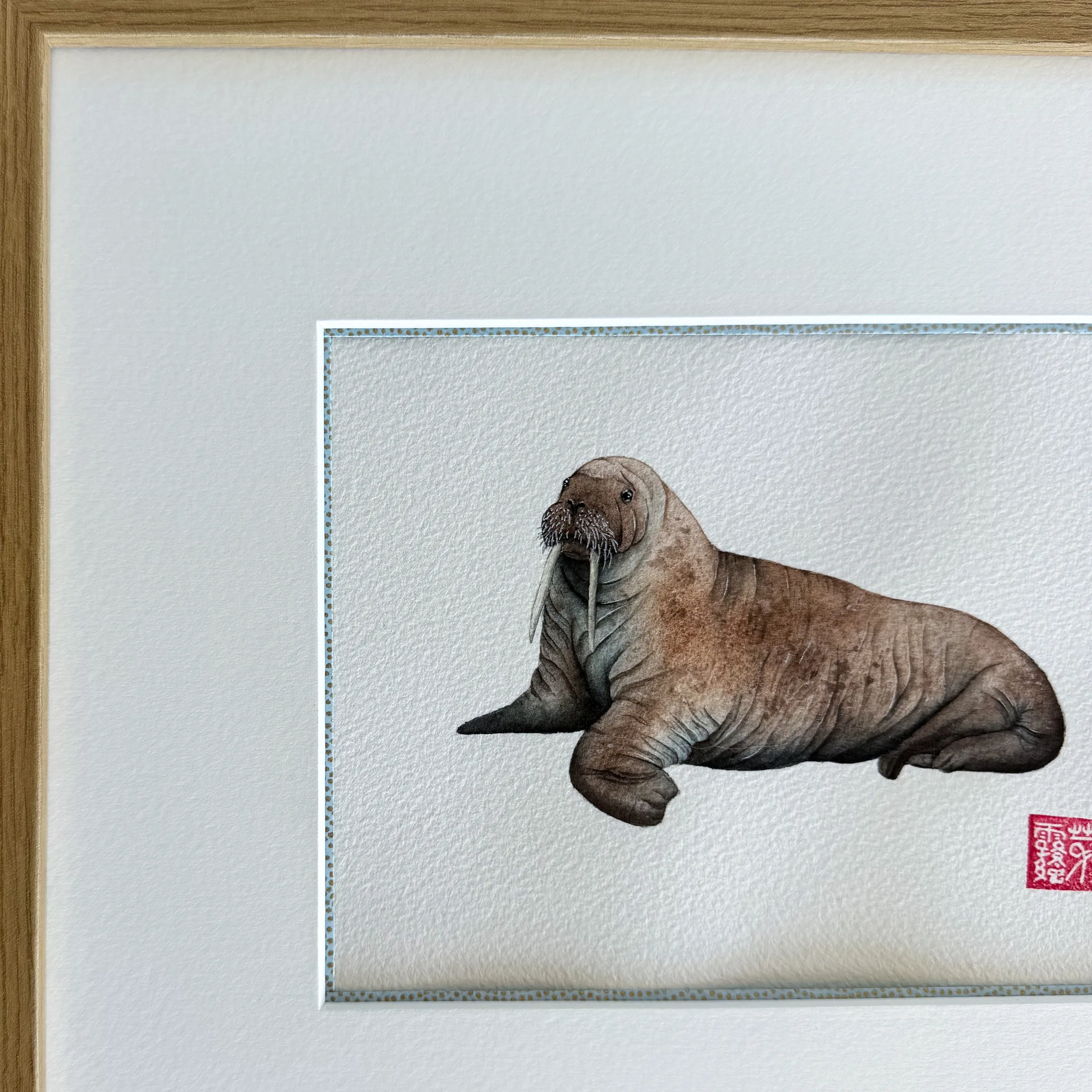
The inlay strip is not an option you choose: it will be specified on the product page of the original watercolors when present.
The mat covered in Japanese paper
Here, the entire surface of the mat is dressed. Japanese paper has a texture, a lightness, and a material quality that nothing else quite replicates. Applied to the board, it gives the framing an extra graphic and poetic dimension, one that resonates particularly well with my watercolors inspired by nature and Japan.
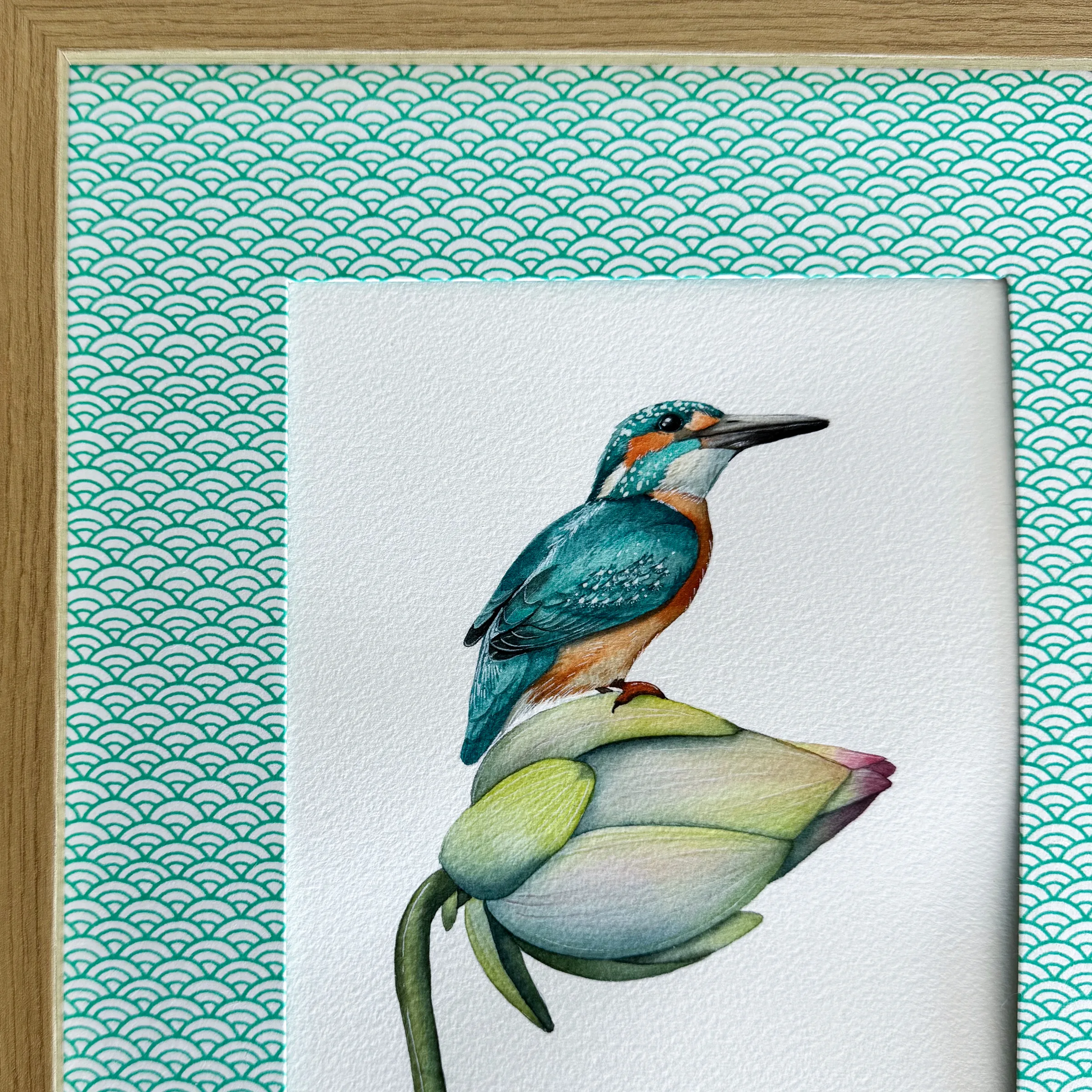
The Japanese paper covering is not an option you choose: it will be specified on the product page of the original watercolors when present.
A more affordable option: the frameless mount
Not everyone wants or needs a full frame with a wooden molding.
There's a simple, understated, and very effective alternative: the frameless mount. The concept is minimalist: the watercolor (or print) is mounted on its backing board, protected by a piece of glass, and the whole thing is held together with craft tape on the edges. No wooden frame, no molding: just the artwork, the glass, and a clean, discreet finish.
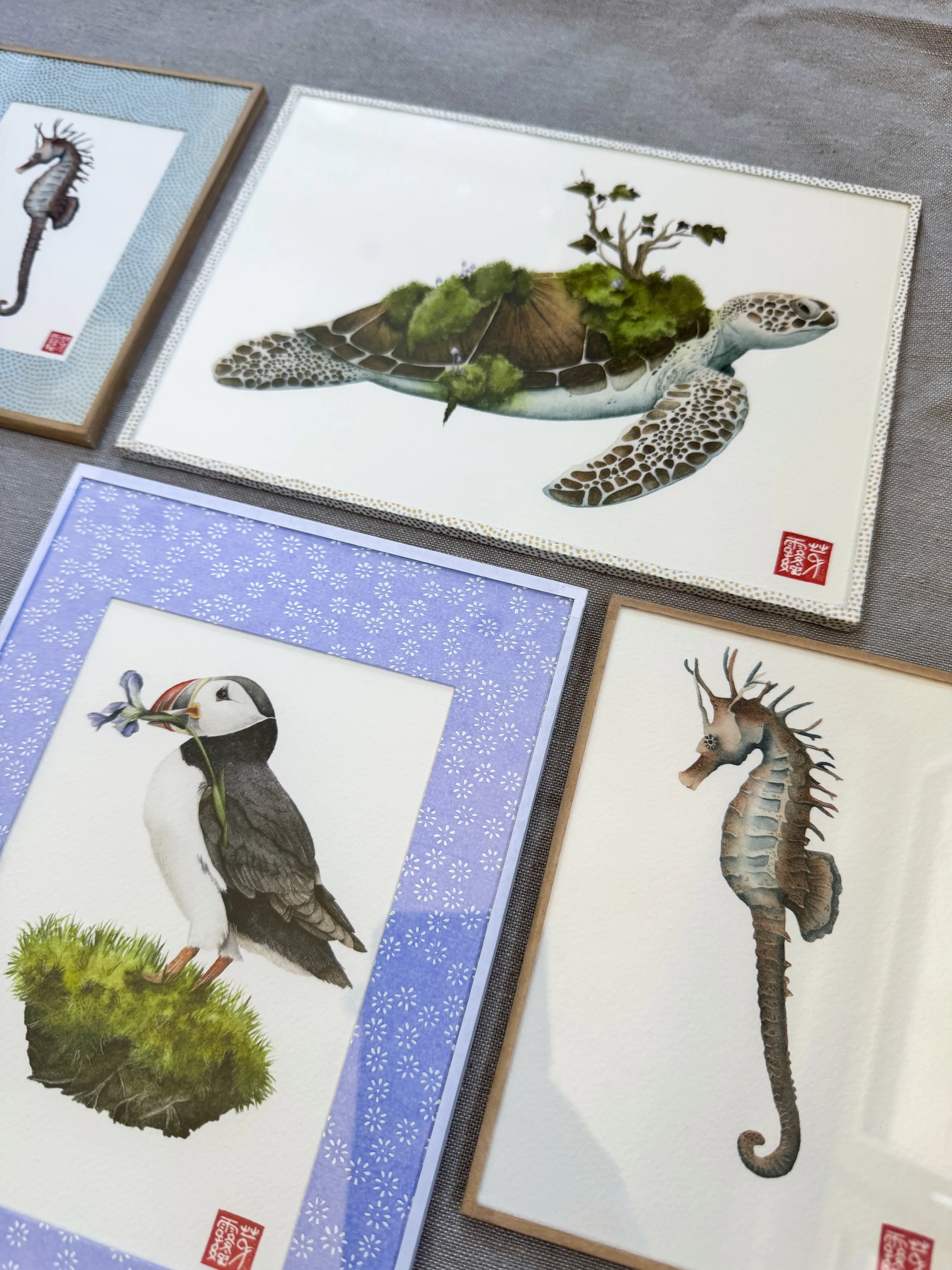
It's an affordable yet graphic solution that works particularly well in pared-back interiors, or as an object to display on a shelf. For a more personalized version, the edges can be covered in Japanese paper or bookbinding paper, a way to add color or texture without adding bulk.
This type of framing is not offered as an option in the shop. Look out for these mounts at special drops or at makers' markets.
In summary
All my original watercolors are sent without a frame so that you can choose the one that feels like you. What you receive is a work prepared from start to finish with care: the paper stretched on its backing board, the mat cut to the right dimensions, everything ready to slip into the frame of your choice. No need to visit a framer before you can hang it.
It's preparation that takes time, demands precision, and that I carry out with the same care as the painting itself, because every piece deserves it, and because so do you.
If you have a question about a specific option, or if you'd like something particular, feel free to get in touch: I'm always happy to talk it through.

The author
Méloée Lassauce
Self-taught watercolour artist based in Luxembourg. I write here about the materials I actually use, the techniques I practise and the mistakes I made before you did.
More about the studioSupport the studio
A free-amount donation, no account needed, to keep sharing watercolour.
Make a donationIn the same category